

 X
 Discord
 Instagram
 YouTube
 ChatGPT
Exit Conditions
Exits use the same signal library as entries, which keeps the whole system inside one set of rules.
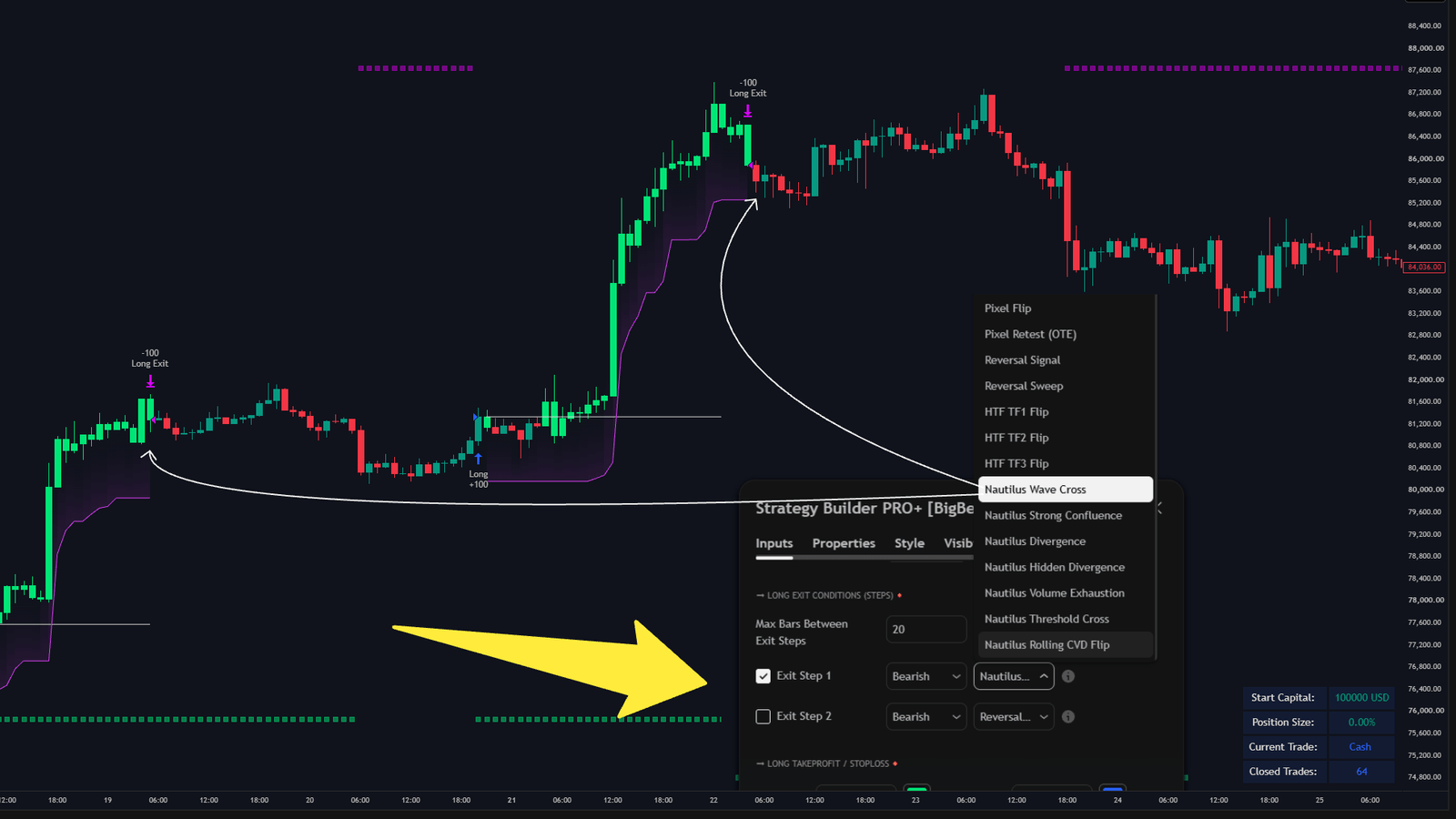
Each exit rule is made of three parts:
| Part | Description |
|---|---|
| Toggle | Enable or disable the individual rule. |
| Direction filter | Trigger the exit only when the selected market bias is present. |
| Signal type | The market event that closes the position. |
When the active conditions are met, the strategy closes the current position automatically. Nothing is left to discretion, so the same rules apply to a live alert as to the backtest.
Choosing exit signals
The most common patterns are:
- Structure-based exits — the order block that started the trade is broken, or the market structure shifts against the position.
- Momentum exits — a divergence forms against the trade, or the oscillator crosses back through the signal line.
- Participation exits — CVD flips direction while the position is open.
Exit conditions sit alongside the take profit and stop loss engine: signals close a trade at market, the risk engine manages the levels inside it.
Settings
| Settings | Description |
|---|---|
| Exit rules | Individual toggles for every exit condition. |
| Direction filter | Restrict an exit to bullish or bearish positions. |
| Signal type | The event that triggers the close. |
